Ugandan Bestiary – poems and photos from a wildlife safari

In 2007, my wife took a volunteer position with a charity in Kampala in Uganda. When the post finished, I joined her for a fortnight. We hired a driver and went around the country, seeing some impressive landscapes and wildlife. We saw tree-climbing lions, a huge spider in our bedroom (which next day our driver told us we should not have left alone – ‘very dangerous’), a cobra, crocodiles, chimpanzees, elephants, gorillas and hippos. I drew on much of this experience for The Dreamer Falls, and wrote some short poems along the way. Here are the poems, with photos that inspired them.

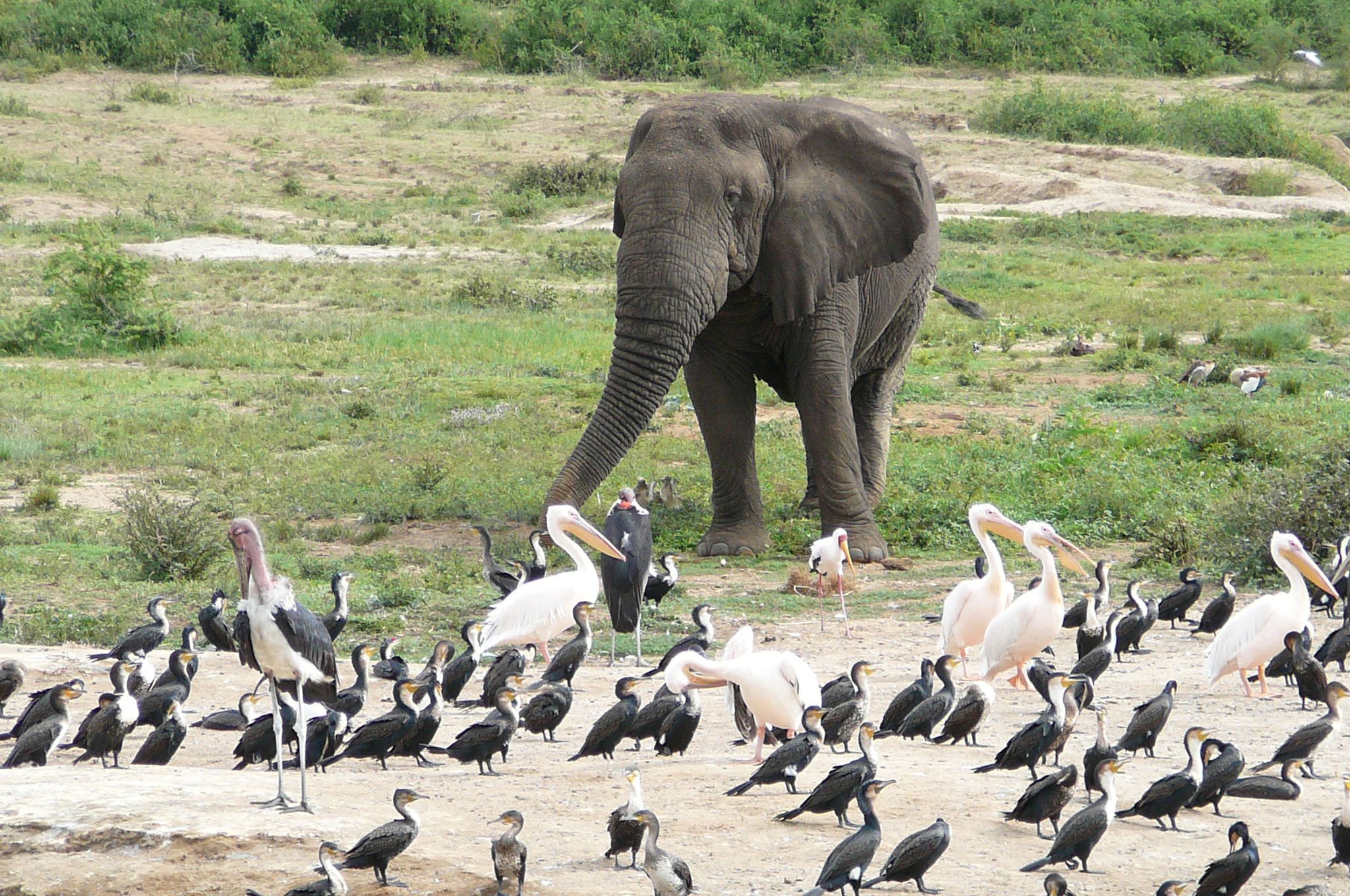
Elephant with birds

Elephant

Skin blackened and slackened by age
tusks long gone
he is outcast on a lonely spit
surrounded by white grebe –
and deathly marabou stork

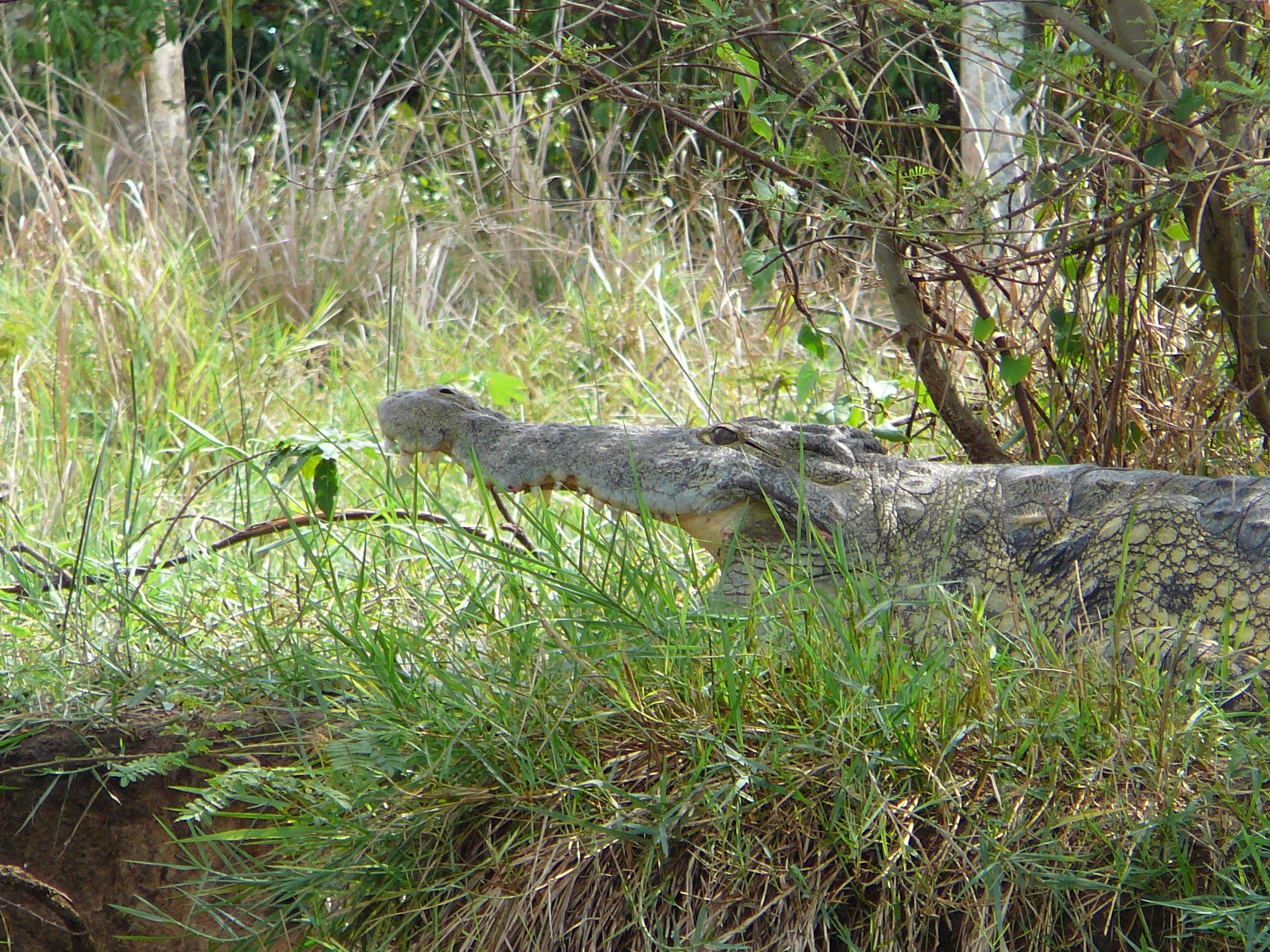
Nile crocodile

Nile Crocodile

Time
and lazy river heat
lift our traps as we dream
in the certainty of a shape
that lasts forever

Rothschild giraffe

Rothschild Giraffe

Orange and brown
untested like young aristos
we rub our [slightly-shorter] necks
on acacia bark and
against each others –

Ugandan Cob

Ugandan Cob

The golden year-ringed horn I’ve lost
proves that
though we’re slight
we too can fight –
amongst ourselves

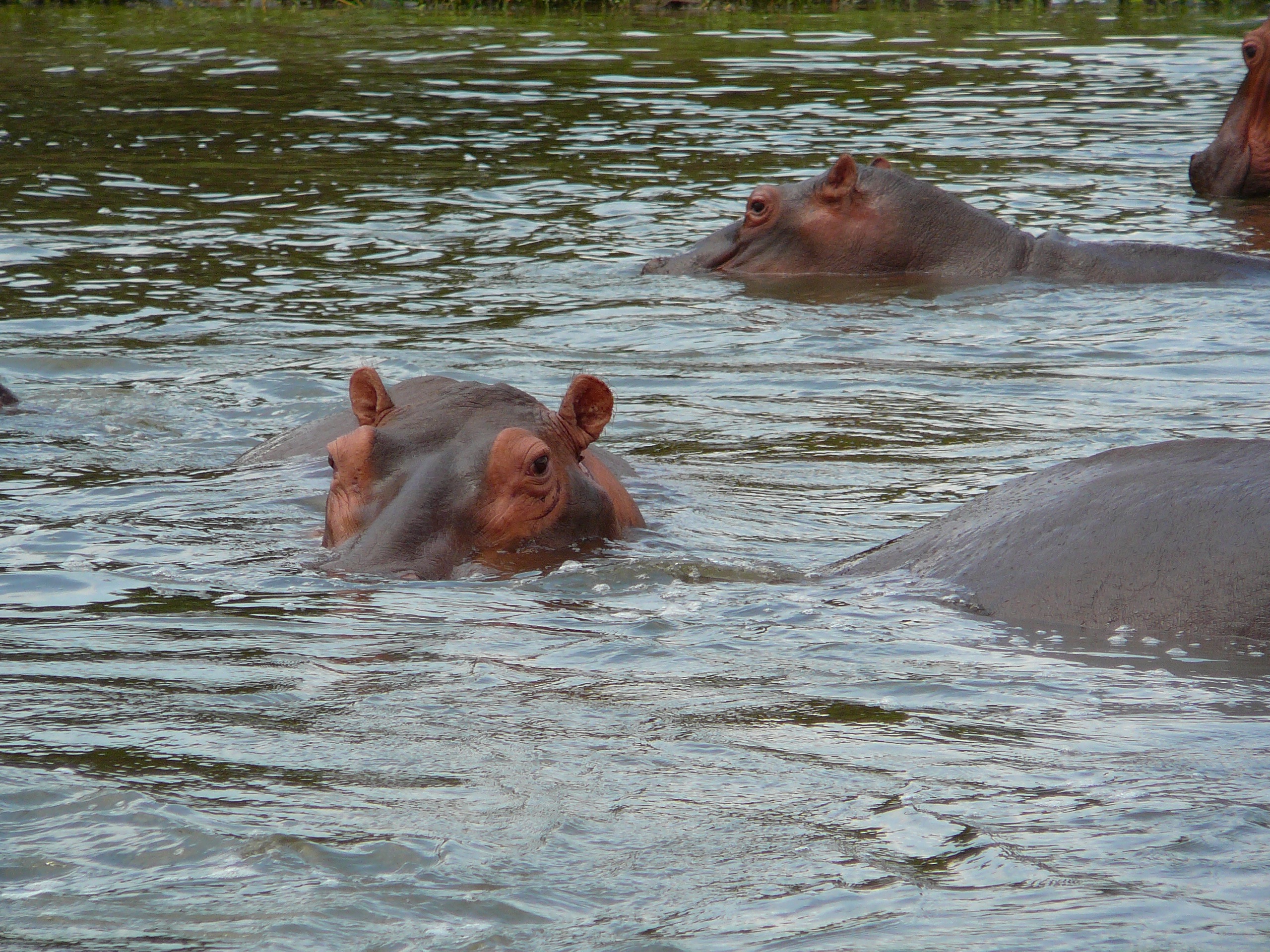
Submerged Hippo

Hippo

We watch
from the top of the river
eyes deep, in ridges of pink –
just beware
there is a mountain under here

Zebra

Zebra

Swishing its tail
to keep the flies off its rump
the eyes saying
please don’t fill me up again
with terror

One I didn’t get a photo for, it was too fast:

Cobra

Sometimes you will see one
crossing the track
and see one we did
a black line drawn by God
and a hunger for rats

And finally, one about the beautiful national bird of Uganda:

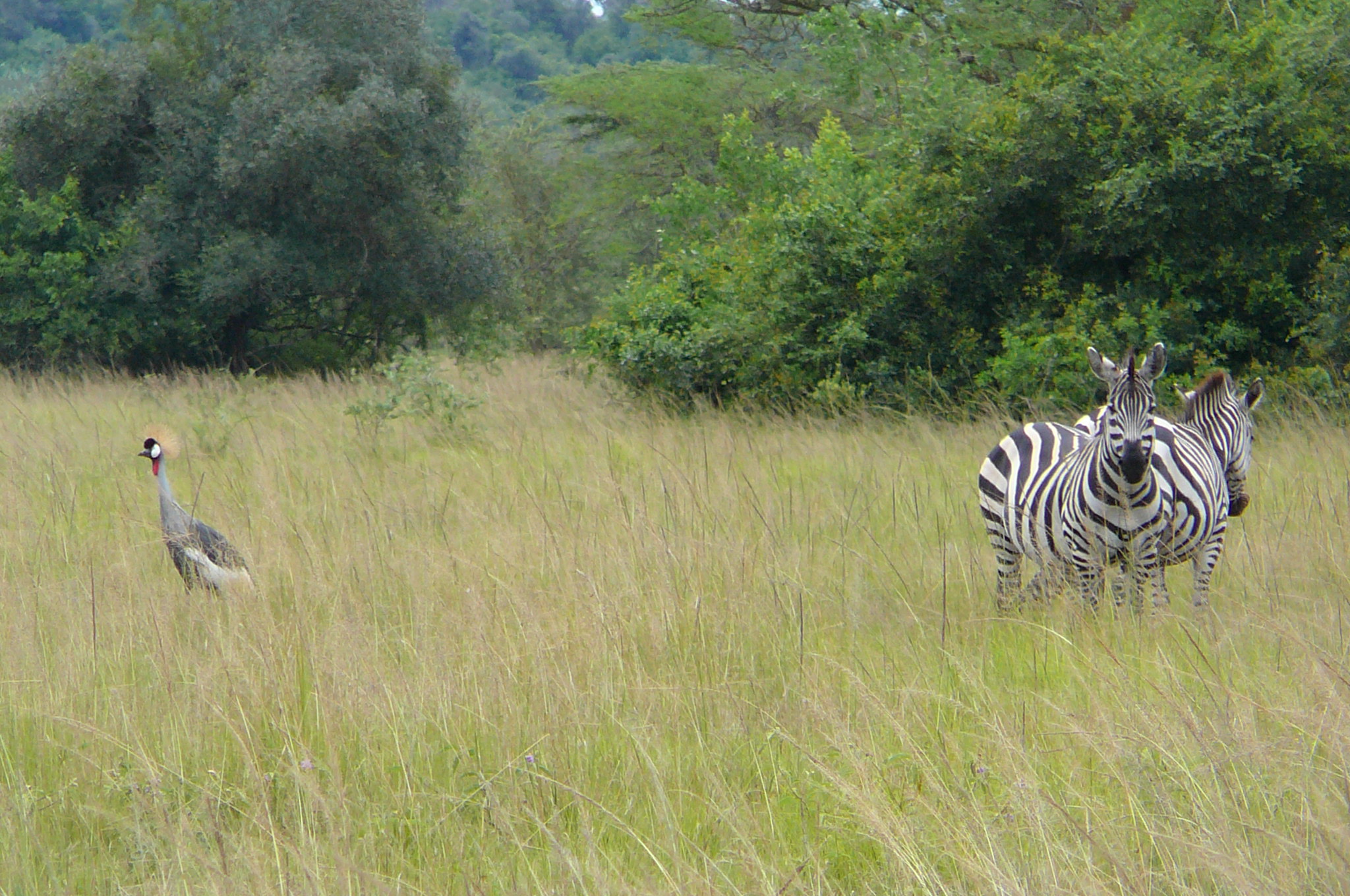
Great Crested Crane with Zebra

Great Crested Crane

Red, yellow, black
I am the Ugandan colour bird
and I call out for life
in the golden straw
of her savannah

Ugandan Bestiary features in my poetry collection, Up in the Air, available here:

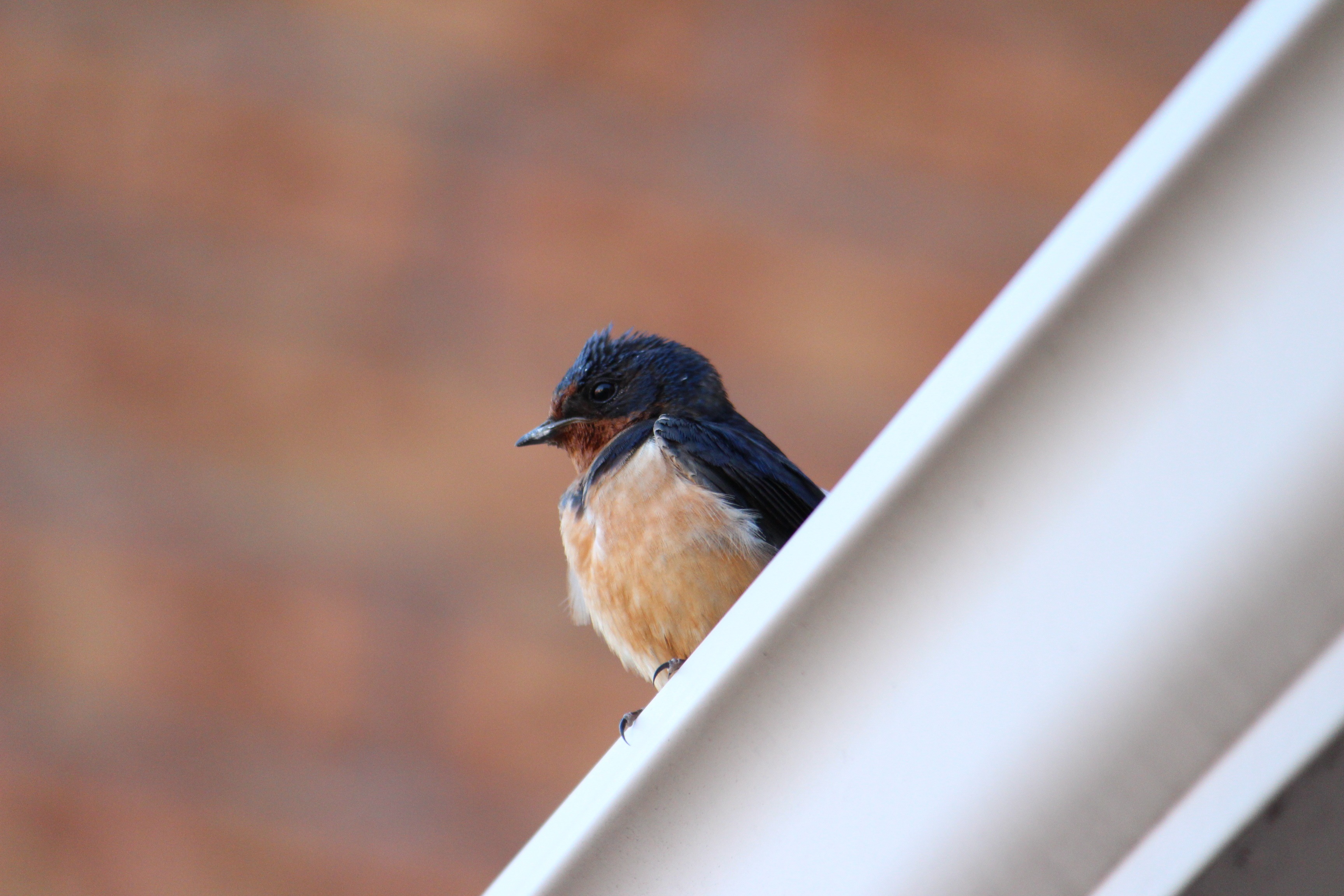
Housemartin

This incident with an adventurous (or possibly confused) housemartin took place when I was staying in a cottage on holiday in rural France. It was an intriguing place, in the grounds of a very small chateau, whose elderly owner used to stand every morning at one of her parapets with a huge Great Dane beside her. The first night I was terrified someone was breaking in because the electrics tripped out downstairs, making a huge cracking sound. That cottage felt like a different world, and a different time.

Housemartin

Then
in through the blue window

a housemartin
hunched up around

angelic beating wings

circling the rafters

tensing our naked bodies
as we read
and drink coffee in bed –

we curl our morning papers,
prepare to drive the thing out.

But
this bird is no amateur,
doesn’t panic in a crisis –

no, this bird
knows rooms,
is a reader of houses

and sees this one’s ours

so retreats quickly
leaving us with only

the gift
of the beat
of his wings

in our hearts.

This was one of several poems I had published in the Belmont Art Centre’s Poetry File programme for teaching in secondary schools in Shropshire. It features in my poetry book Up in the Air, available here:

The Lesson – Short Story

Before I began writing novels I wrote a few short stories. Mimi, based on a true story of witchcraft in Zambia, can be found here.

And here is The Lesson, a short, apocryphal tale of a boy returning to his old school, surprised to find that he is not the only one still alive. I’ve made only one or two minor edits, so this is pretty much as I wrote it in my early twenties.


The Lesson

On the seventeenth day I came across my old school on the hill.

For seven hundred years its granite towers had nurtured the misery of countless stoic children, sending them out into the world with a lifetime’s supply of gall and bitterness.  But no longer.  Now its high, vaulted classrooms and corridors were empty, drained of life, of youth’s tenacious concentration and capacity for knowledge.

Or so I assumed.

I only went in because there was nothing else for me to do.  Nowhere else for me to go, and no one to see.  I was alone, alone in the deepest sense, without any possibility of home.  Like the butterfly in the story that moves casually on the currents and scents of the air, only to find itself far out at sea.  It was without any sense of hope or sentiment that I went back into my school.

The wind blew cold as I went up past the bleak, gabled houses of Marriott Street.  I glanced back at the city once or twice, black and grey like a machine broken on the earth below me, but found it easier to look at my feet, and the rain-polished cobbles of the road.

At the gates of the school I stopped, looking up at the emblem that hung crucified on their skeletal black iron.  Altiora Peto, said the small capitalised white letters beneath the knight’s helmet.  I should think, I thought.

The gates were halfway open and I went in, feeling once again the leaden reluctance that had accompanied those steps every time I’d made them.  I came into the main courtyard, the place where we’d assembled for fire drills, or on long benches for the school photographs.  I turned about, looking up at the gaunt buildings that crowded the square, like spectators at a classical games.  They stared at me impassively, indifferent as to whether I excelled or bled.  Even outside, a faint sour-milk reek still lingered on the air.

Then something happened, like a lash caught in the side of my eye – a movement, off to the right.

My heart leapt – someone was alive!  But whoever it was had disappeared around the corner, so I shouted and gave chase.  You must remember, I hadn’t seen a living thing for days.

I came round the side of the Humanities block and caught sight of a young boy, standing with his hand against a door, catching his breath.  He looked about eleven or twelve, and he was wearing school uniform – a navy blazer, grey shorts, and long grey socks with two maroon-coloured bands at the top.  As soon as he saw me he sprang off into the building.

‘Come back!’  I shouted, then realised he probably wouldn’t be able to hear me anyway.

I followed him into the building and ran down several long corridors, hearing his patent shoes slipping on the red-tiled floor as he skidded around corners.  After a minute or so I thought I’d lost him, but then heard the loud muffled boom of a bell.  It was the first real noise I’d heard for weeks.

Knowing where the sound had come from, I headed for the main hall, where the bell-rope hung and worn stone steps rose around the walls to the second and third floors.  When I reached the rope it was still snaking, and giving off the odd kick.  I looked up and saw the boy’s head above me, leaning out from the second floor banister with his scruffy blond hair splaying out like a halo.

‘Wait!’  I cried, but he didn’t.

I went up the stairs slowly, breathing heavily.  I remembered this floor because one of my classrooms had been up here.  At the landing I was about to carry on up, when suddenly I felt the urge to see that old classroom.  I headed down the corridor, and soon came to the nut-brown panelled door of H5.  I turned the bronze handle, and went in.

Those thirty-odd desks, each with its own small, plastic chair – I was instantly taken back, and felt a pang of nostalgia.  For a moment I remembered the sense of calm that came on the odd time you were first in, when the space was your own.

Except now it wasn’t.

The Master stepped out from behind one of the pillars, dressed in his beige check suit and shabby black cloak.  His face was swollen and pink, streaked with capillaries, and what remained of his dark hair frizzed around the flaking dome of his head.  From behind black-rimmed spectacles his beady eyes fixed on me, sharp and alive like some weather-beaten seabird.

‘You! Burns, isn’t it? You’re late,’ he said.

I wanted to grasp him, to shake him and tell him how pleased I was to see him – but didn’t.

‘I’m sorry, sir,’ I said. ‘It won’t happen again.’

‘It better not.  Sit down.’

I cleared one of the chairs, and sat down looking at the blackboard.

‘Today we have maths,’ he said. ‘Open your text book at page seventy-five.’  I noticed his voice was thick and slurred as if he’d been at the drink again.  But I suspected it might be something else.

‘I’ve forgotten my book, sir,’ I said.

‘Put your hand up when you want to talk to me,’ snapped the Master.

I raised my hand.

‘Yes?’

‘Sir – I’ve forgotten my book.’

He took a deep breath and looked down at the parquet flooring.  He pushed a palm across his sweaty brow.  ‘You’ll just have to share with someone else,’ he said, turning his back on me and shuffling towards the blackboard.  I noticed several white rectangles of chalk imprinted on the back of his cloak, and remembered how we boys used to bash each others’ blazers with the board rubber.

As the Master straightened himself in front of the board, I looked across the classroom to the broad bay windows.  Their panes of glass, swollen at the bottom, distorted the view of the fields and ox-bow lake in the carse below.

‘Right,’ said the Master. ‘I’d like you, Burns, to remind me of what we went through yesterday.  You know, the algebra.’

I looked back from the window at the Master.  ‘I don’t remember, sir.’

‘No, no, never mind.  Let me see now…’  Hand shaking, he picked up a stick of chalk and turned to the board.  ‘What was the question… oh yes.  Burns, see if you can tell me the answer to this one: what does thirty plus one equal?  Got that?  Thirty, plus one.’

I thought for a moment, trying to ignore the old-milk odour that was particularly strong in the classroom.  ‘It depends, sir, which one you mean.’

‘Don’t be stupid, boy.  You know very well what I mean.  Thirty plus one – what is it?’

‘I think thirty plus one equals a class, sir. Thirty pupils and one Master.’

‘Yes, yes, v. good!’

‘But thirty plus one…’ and here I gently pushed with my toe the corpse of the boy that I had removed from my chair, ‘can also equal nought, sir.’

‘How so?  How so?’

‘Thirty boys, plus one sound bomb, sir.’

His face dropped, and the arm that had been looping across the blackboard with my every word suddenly fell limp at his side.  ‘Oh… of course.’

For a moment he stood, staring across at the body of another boy slumped forward across a desk.  A trail of congealed blood had seeped from the boy’s ears and now linked him for eternity to his open exercise book.

Then the Master shook himself and said: ‘You’ve done well, Burns.  As with most things, the way you tackle the question will influence your answer.’

‘How come you survived, sir?’

‘I – I don’t know.  Maybe I was down in the archive vaults – I’m not sure…’

I remembered my own experience, pot-holing in the Highlands.  Even deep in the earth the noise had managed to seek me out, making my ears burn and bleed as if they’d been stung in the most tender cavities by a thousand angry wasps.  I was left coughing and gagging for hours, half senseless with agony.  But I had got better.

‘Were there any others…’ I began to ask, but then he pulled his back straight, revitalised by a new wave of memory.

‘That’s all for today, Burns.  Class dismissed.’

I stood up and headed slowly towards the door.  Suddenly he spoke again.

‘By the way, Burns… if you see Evans, tell him I want to see him.’

*

I decided that I would stay the night in one of the dorms.  I headed up to the third floor, hardly noticing as I stepped over the bodies of two teachers who had fallen across the stairway – just part of the huge necromass I had grown used to, which not only included people but also pets, birds, and fishes of every kind.  Even the vast majority of insects had perished.

At the top of the stairs I came to the dormitories, crammed up in the slate roof of the ancient building.  The windows of these rooms were small squares, and many hung open, letting in the cold autumnal air.  I closed a few and headed for one of the washrooms at the end of the corridor.  Then saw Evans again.

He came out of one of the toilets, but as soon as he saw me he was off, through into another dorm.  I shouted at him to come back, but was now certain he was deaf.  Wearied by my encounter with the Master and the unsettling atmosphere of the school, I couldn’t be bothered to give chase.  I was going to wash, but then heard a crashing noise in the next room, and went over to the door.  I turned the handle and pushed but something heavy had been brought down behind it.  Jamming my shoulder against it I eventually managed to push my way in.

And found myself confronted by the strangest sight of all.

The room was in chaos.  Beds and furniture had been overturned and the walls had been covered in pictures and spray paint.  Washing lines and string had been taped to the ceiling, and pages from magazines hung from them like something to scare off birds.  But worst of all was the smell, a mixture of long-moulded, sour cheese, and urine.

A fire escape door banged suddenly in the wind, alerting me to the way the boy had fled.  I moved carefully through the room, picking my way amongst piles of sheets and blankets and broken chairs.  I looked at the pictures, saw Batman and Spiderman comics, women in lingerie.  On one wall, the Anarchy symbol had been drawn in red, that I hoped wasn’t blood.

Halfway down the room I came across an upright bed with a dead boy in it.  Like the others, his skin was loose and mottled, and his eyes sagged back into his head.  Life had left him through the ears and down the sides of his cheeks, leaving two dark slug trails of blood that bloomed on the white pillow.  The whiff of rotten gas still hung around him.  I guessed the boy must have been off sick when the bomb struck.

At the far end of the room a small tent-shaped enclave had been created by propping several beds up against each other and covering them with blankets.  I looked in and saw a mattress with some scrawled-up sheets and a pillow, evidently where Evans now slept.  The bed was covered in a litter of cuttings from comics and other magazines.  A small torch nestled on the indented pillow.

Looking closer I noticed a black-and-white picture of the Master holding the hand of the boy.  The Master had a tight smile on his face and his small dark eyes fixed the camera .  The picture appeared to have been cut from the school magazine.  The caption read:

Miles Evans (Year 4, H5) being presented with the Kingston Award for Mathematics by Head of Dept, Mr Bennett.

At that moment I heard a muffled cry, coming from the centre of the building.  I ran back through the dormitories, towards the main staircase and bell tower.  As I came into the red-tiled hall, I heard the shout again.  It was the cry of a man, followed by a thwack, and the screech of a child:

‘You did this!  You did this to us!’

I leaned up against the banister and looked over the stairwell.  On the second floor below, I could see the cowering, cloaked form of the Master, lunging about with his arms in front of his face.  The boy Evans was a few feet away from him, pulling board rubbers from a satchel and hurling them point blank at the helpless man.

‘It’s all your fault!  You did it!’  His words were shrill yet distorted, as if coming up through water.

The Master wailed ‘No!’, stumbling away from the boy.  A board rubber struck him on the top of the head with a loud crack, producing a network of bloody trails like forked lightning.

‘You’ve let us down.  You’ve let us all down!’

I was just about to intervene when the Master, clearly terrified and confused, staggered back and hit the low balustrade.

I watched as he pivoted swiftly over, and quickly struck the floor below.  He lay there motionless, sprawled like some ghastly black bird that had died in flight and fallen from the sky.

Evans looked over the railing at the body of the Master.  After a few moments, and without uttering a sound, he headed off down the corridor.

I stood there for a while, then made my way back down through the building and out into the courtyard, past the corpse of the photographer and the lines of children collapsed on the benches.  I had decided not to spend the night in my old school.


The Rewards of Writing

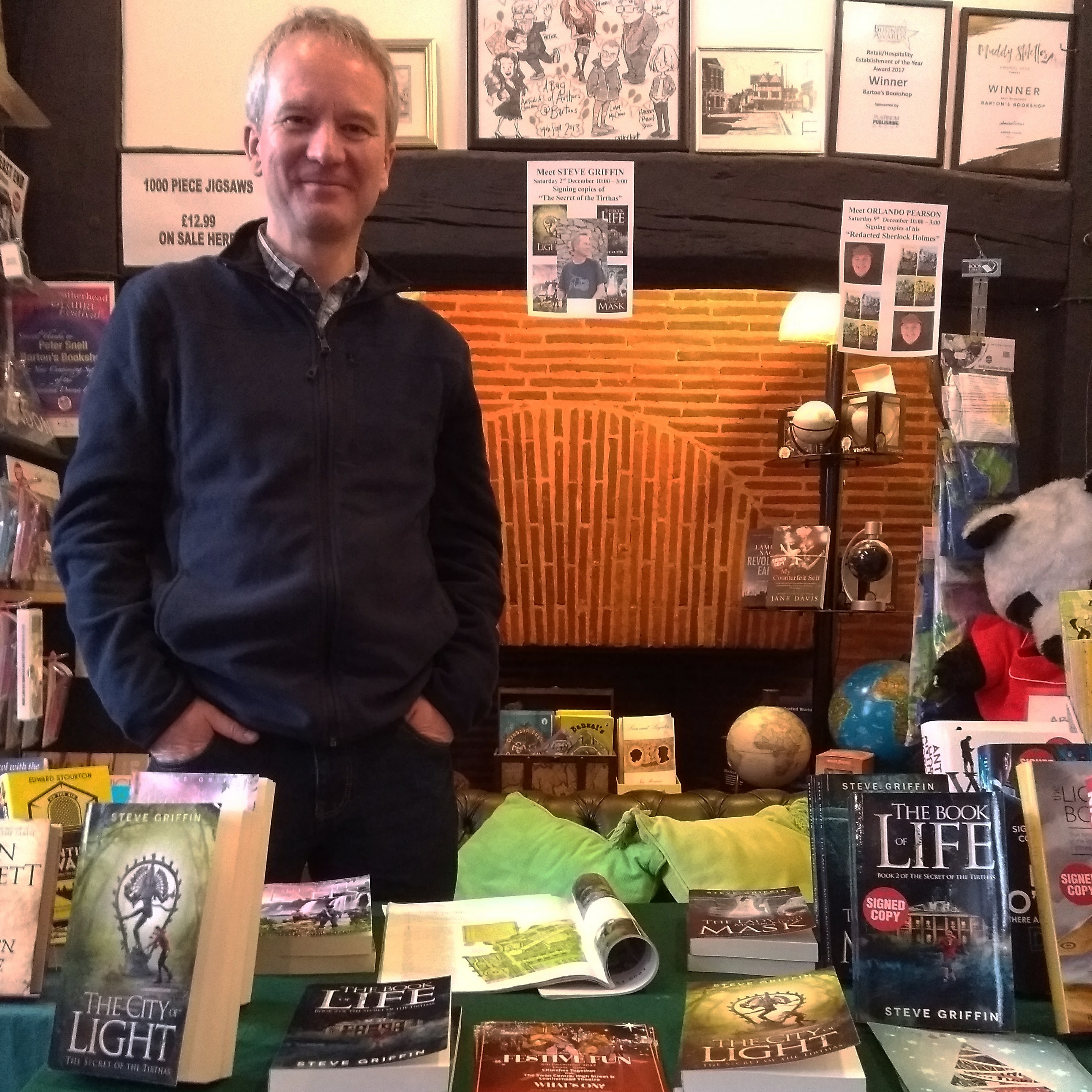
Book signing at Barton's bookshop

Book signing at Barton’s bookshop

Let me start by saying it’s not for the sales – although of course they are welcome! I write simply because I enjoy it. I’ve always written, starting with my own New Avengers and James Bond stories when I was eight, and later on casting my school friends as the heroes and villains of action stories and westerns. It was fun – and gratifying – to see them being passed round class.

After focusing on poetry in my twenties and thirties, I am back to writing adventure stories with The Secret of the Tirthas. I enjoy creating stories full of suspense, mystery and intrigue – and it’s always fantastic to get feedback from readers. Obviously, sales are a good, hard measure of how appealing your book is. But reviews, particularly on Amazon and Goodreads, and increasingly direct, face-to-face feedback from readers are both huge reward and encouragement.  I was over the moon when The Guardian newspaper published a positive review of The City of Light by a 14 year-old-reader. And I have been similarly bowled over reading reviews by book bloggers such as Handsfull Mama in America and The Whimsy Bookworm in India.

But of all the direct feedback I’ve had, perhaps the most rewarding to date came yesterday, when an 80 year old lady came with her husband into Barton’s Bookshop, where I was doing a book signing event. This lovely lady had been given my first two books as gifts by her daughter, whom I met two years running at Pippfest in Dorking. I was delighted when she introduced herself with the words ‘I’m a fan of yours’ and we proceeded to have a long conversation about the inspiration for the books, including the real garden of rooms, my trips to India, and the Herefordshire countryside, which she and her husband knew well.

So, if you’ve read one of my books please write a review. And, if you meet me face to face, tell me what you liked (or didn’t) about the story. It means a lot to me.

Best Books: Grown-ups

My last post was a collection of my Goodreads reviews of the best Young Adult and Children’s books that I’ve read over the past couple of years. In the same vein, here’s some of the books for grown-ups that I’ve reviewed in the same time period:

Jack, by A.M. Homes

One of the best coming of age novels. Jack’s initial mortification at his dad’s coming out is soon compounded by everyone at school finding out, and not helped by the anodyne wisdom of the adults around him. But his parents’ separation is just a springboard to greater worries about joining the ‘complicated, boring’ world of society. Jack is sure there’s an alternative, but he’s shooting in the dark. Will he make it? 5 stars

Olive Kitteridge, by Elizabeth Strout

A profound portrait of an individual and a community. The vignette-style chapters of characters who are emotionally damaged, close to illness and death, combines with the rough beauty of the Maine landscape to create an oddly affirming account of what it can mean to be alive. Olive Kitteridge is scathing, no-nonsense, pragmatic; and completely invested in her garden, the blooming of her tulips. 5 stars

The Crossing, by Andrew Miller

This book isn’t exactly long, but it takes you on an amazing journey. In the character of Maud, the author has created someone both mysterious and scientific, rooted in the world. When she’s met by tragedy her journey alone across the Atlantic, one moment calm and the next terrifyingly wild, is gripping. I wasn’t so sure about the ending, but this seems to me a resonant book for our times. 5 stars

The Essex Serpent, by Sarah Perry

Beautifully written, strong on character and historical detail, but overall lacking in drama and suspense. The book didn’t live up to its fabulous title, with the serpent and related gothic trappings never really coming to life. The relationships were interesting, and I liked the ending, but again they felt devoid of sufficient tension to merit the long story. 3 stars

And Then There Were None, by Agatha Christie

My only criticism of this fantastic book, the first Agatha Christie that I’ve read, is that I would have liked more of it. More detail about the characters, more description of the setting. It almost defines ‘pared down’. But it’s brilliant nevertheless. 5 stars

In a Dark, Dark Wood, by Ruth Ware

Nora, or Lee as she was formerly known, has partially resolved a past trauma through her work and the isolated life of a writer. But it all comes back again when she is invited to a hen party, only to find that the her former best friend is marrying the man who broke her heart. The setting, in a remote, glass-walled house in a Northumbrian pine wood, adds to the tension. We know from the start it will end in blood – but is it going to be at the hands of angry locals, or someone in the party? A masterful suspense story. 4 stars

The Wine-Dark Sea, by Robert Aickman

The attention to detail in these stories and the deeply-knit tensions make you think you are heading for a full length novel, something that is going to take you to fantastic, dark places and give you all kinds of revelations. And you get some of that, but Aickman uses the short story to cut you off in mid-flow, to leave early, to depart in a manner that leaves you wanting more. There hangs the doom of foreclosure across all his tales, which I think is exactly what he wants. His glimpses, of the afterlife, of archetypes, of the dark and strange potential behind reality, are perfectly suited to the form. I haven’t read a book as compulsive, as strange, as brilliant as this in a long time. Read it! 5 stars

City of Light, by Lauren Belfer

A complex historical thriller set at the turn of the twentieth century, when the first power stations were being established at Niagara Falls. It was a time of great hope (with promises to roll back the darkness and let poor children read by electric light) and great conflict, between unionists, black people, and nature ‘preservationists’ against the powerful new industrialists. It’s all told from the perspective of the spinster head teacher of the local girl’s school, who bears a major secret of her own that commits her to engaging with the dark and dramatic events. Recommended. 4 stars

You can check out the books I’ve read, see what people say about The Secret of the Tirthas, send me a friend request, and more over on my Goodreads profile page.

Best Books: Young Adult & Children’s

I’ve become quite a fan of the readers’ social media platform, Goodreads. I like it for three reasons:

  1. It’s a great way to get to know readers and writers, and to make friends. You can even compare all the books you’ve ever read with them, and see how similar (or wildly opposed) your tastes are.
  2. As a writer, it’s a great way of seeing what readers think about your books. Most users rate their books as soon as they finish them, and some do written reviews. Because it’s a social media platform, you get more reviews than on Amazon or other retail sites.
  3. It’s a great place to find out about books, as well as to log all the books that you’ve read and want to read. A friend once said that she wished she could write just a few sentences of each book she’d read as she finished it, because it’s so easy to forget books after a while. And it’s the perfect platform for that.

You can check out what people think about The Secret of the Tirthas, compare your books with mine, and send me a friend request all on my profile page.

Anyhow, I thought I’d share some of the best books I’ve read over the last couple of years, which I’ve reviewed on Goodreads. In this first post: Young Adult & Children’s Books.

A Library of Lemons, by Jo Cotterill

A beautiful book about the mistaken routes we take to cope with grief and the long-term harm they do. Lovely, lucid writing – I particularly liked the image of the reclusive father receiving an invitation and looking like a hamster about to be plucked from its cage. Recommended for readers aged 10+, including grown-ups. 5 stars

Charlotte’s Web, by EB White

One of the best books I’ve read in a long time. I didn’t come across it as a child, but thankfully have had the chance to read it to my own children. The writing is wonderful, rendering the beauty and sadness of nature with almost perfect precision. The ending is, of course, heart breaking, and my wife and I had to take it in turns consoling our six-year-old. But he understood bravely the message that (paraphrasing Dylan Thomas) whilst friends may die, friendship will not. 5 stars

The Last Wild, by Piers Torday

Gripping, harrowing, comical, exciting… and with a very strong message about how much damage we do intentionally and unintentionally if we don’t remain vigilant about our connection to the natural world. This is a fantastic roller coaster of a book, with heroic children and animals, and the animal world’s version of the Child Catcher in Chitty Chitty Bang Bang in the form of Captain Skuldiss. 5 stars

Doctor Who: Ghosts of India, by Mark Morris

I really enjoyed this book. India just after the second world war is masterfully depicted, with the hope, mystery and exuberance nicely balanced against the ominous clouds of coming strife with partition. The adventure has a good blend of villains and monsters, from the ghastly white ‘half-dead men’ to crazed Army Majors, giant crocodiles and cobras. The meeting of Gandhi with the Doctor is wonderful, and it’s left to Donna to draw parallels – and the Doctor to highlight the one key difference between them. A fun ride, with a pointed note of sadness at the end. 4 stars

The Chicken Dance, by Jacques Couvillon

I love this book, it’s a fantastic take on the huge capacity for patience and acceptance that children have, and the things they’ll do to ensure that no matter what they’ll find a way to have fun and give their lives meaning. Don is a winning example of one of those kids who end up parenting their parents. His final act of kindness breaks your heart. My only criticism is that the book feels a little drawn out towards the end – but that’s not enough to knock it off the top spot. Surely the best book you’ll ever read about chickens, too. 5 stars


The Misadventure of Bolingbroke Manor: An interactive ghost hunting adventure, by Ellie Firestone

A great, well written interactive book, perfect for the creepy season! I’ve just read this with my son (age 7) and we really enjoyed it. Unfortunately, he came to a sticky end, but we will be playing it again soon. Recommended. 5 stars

Miss Peregrine’s Home for Peculiar Children, by Ransom Riggs

I loved the concept of this novel, in which the author draws on the fascinating power of old photographs to weave his fantastical story set between Florida and a wet and windy Welsh island. In the back notes Ransom Riggs explains how the creative process worked, with sometimes him hunting through thousands of archives to find the right picture and sometimes the story being pulled in a new direction by a chance find. With a big idea like this I’m sure there was a danger of things not working out. No fear. This is a masterful story full of strong characters, inspirational settings and a plot that keeps you gripped right to the end. 4 stars

Rooftoppers , by Katherine Rundell

Structurally, the book felt a little unbalanced, some bits were overly long – but somehow this added to its sense of originality and poetry. I loved the tangential metaphors, particularly as they illuminate Sophie’s inner life. And the ending leaves you in a perfect spin. 5 stars

We Were Liars, by E Lockhart

A stylish novel that messes around with your expectations. Set on an idyllic island, four privileged teenagers find their lives shadowed by an accident involving the narrator, which she is unable to remember. The story is pervaded by a sense of disturbance – brilliantly reflected by occasional, explosive images – and reproach throughout. Who’s the subject of this reproach – the wealthy patriarch, his money-grabbing daughters, the idealistic, enigmatic Gat? Given the unreliability of her memory, does the narrator even know herself? Well worth a second read, loved it. 4 stars

All Aboard the London Bus, by Patty Toht

Can’t fault this lovely book. Excellent illustrations and poems, and a great introduction to London. 5 stars


Don’t Let the Pigeon Drive the Bus! , by Mo Willems

This has got to be one of the best picture books ever. The only time you will love hearing your children shouting ‘NO!’ 5 stars

The Dog in the Diamond Collar, by Rebecca Lisle

Read this with my boys aged 6 and 8 at bedtime. It’s a great story, full of laughs, with wonderful illustrations. The youngest couldn’t get over the name the three boys called the dog, Clinky Monkey (‘he’s not a monkey!’). I particularly liked the scene where they put the dog in a babygro and then wheel him around in a pram to get him into the zoo. When we finished, I asked the boys to mark it out of 10. 10 and, to quote, ‘Googol’ (10 to the 100th power) were the answers. 5 stars

Locked in Time, by Lois Duncan

I was drawn to this book by I Know What You Did Last Summer and the atmospheric Louisianan plantation setting. The story is enjoyable, with an engaging heroine who has to deal with the challenge of her father remarrying into an enigmatic southern family. The suspense is there, although perhaps not taut enough by today’s standards. 3 stars

In praise of… independent bookshops

I’ve just delivered a few copies of The City of Light to Barton’s Bookshop in Leatherhead. This independent bookshop has been fantastic for me as a local writer. The owner, Peter Snell, and his staff (especially Cameron) have been incredibly helpful and supportive. I’ve done two signing sessions there and we’ve now got a third scheduled for Saturday 2nd December. They’ve sold over 60 books, with all four ‘Secret of the Tirthas’ novels on permanent display. And they’ve also put me in contact with the excellent Jane Dixon-Smith who designs my book covers. So if you’re anywhere nearby – go in and buy some books, and keep your local independent bookshop thriving!

Mimi – a short story

Time for another first on my website. Having just read Robert Aickman’s fabulous collection, The Wine-Dark Sea, I went through my old files in search of some of my own ‘strange stories’ (as he called his dark, often haunting short stories). This story is based on a true incident that happened to one of my friend’s colleagues, who was working for an NGO in Zambia.

MIMI

1. Five Months Ago

Mimi loved the Munyati’s plump black dog Baba with its stumpy uneven legs, which made it waddle when it walked.

She and Zabaida did funny impressions of it, swinging out their hips and bending over and folding their arms over their heads like ears. Mimi thought Zabaida was the best, she could tip her head down and make a deep little woof just like Baba, but Zabaida thought Mimi was better, she did the lazy roll of the eyes just right.

So when Mimi spotted Baba snuffling through the gutter across the street she shouted the dog’s name and ran out towards him.

And got hit by a car, one of those big four-wheel drives made by a Japanese company.

The four-wheel drive is deemed the car of necessity for those businessmen, safari operators, and aid workers who must traverse the poor infrastructure of Zambia. The roads are too rough, too gouged by potholes and scoured by the rains for the low chassis of normal cars. It is too easy to become grounded, too easy for weedy tyres to blow out on sharp stones. A four-wheel drive, with good air-conditioning and tinted windows to stop the sun’s glare is best. With a cattle bar to protect your radiator from collisions with livestock in the countryside, and fenders in Lusaka.

The cattle bar struck Mimi at a speed somewhere around twenty miles per hour. There was a loud crack and the child bounced loosely back on to the side of the road.

The driver of the car, an aid worker named Joseph, screamed and slammed on his brake. The tyres bit deep into grit, sending out billows of brown-red dust. Joseph looked into his rear-view mirror, instinctively turning down the tape of UB40 that filled the cabin with a bass-heavy thump. Through the swirling dust he could see the child lying still on her back.

‘Oh Lord, no, please…’ he whispered.

He looked across at the glove compartment, but it took a few seconds before his confused eyes focused on the white cross in a green circle.

Joseph reached over, unfastened the latch, and pulled out the First Aid kit. He drew the kit across, grabbed the door handle, and turned to open the door –

And stopped, confronted by a large face barely an inch away from his own.

Oddly, the first thing he noticed was a series of beige blemishes and pocks on the man’s cheeks. Then he saw the eyes, which appeared to be making small circular movements, like a high-powered drill. For a moment Joseph was fascinated, almost hypnotised, like a snake before a mongoose. The man’s eyes were amazing, the most amazing colour – almost yellow, sand-yellow, with a band of green around the edge of the iris.

Then Joseph’s foot crushed the accelerator down on the floor. With a crunch and squeal, the car surged forward.

The man at the window shouted in surprise, but didn’t let go of the door handle. Instead he began to run alongside the car, trying to yank the door open. But the motion of the car meant that, wild with anger as he was, the man could not pull it outwards.

Joseph checked the rear-mirror and found his fears confirmed by the sight of at least a dozen men and women running out from their huts to pursue the vehicle. He shouted, some garbled sound, and shouted again when he looked back at the road and saw an elderly villager in front of him, spreading his arms as if to catch the car like a cow.

Joseph braked and swerved, narrowly missing the man, then threw all of his strength into wrestling the door shut because his clinger-on had used the moment of deceleration to widen the opening.

‘Get off!’ he shrieked, once again flooring the accelerator.

This time the crazy man could not hold on and, in the mirror, Joseph watched as in the midst of the dust cloud he nearly fell over himself trying to slow down. And then Joseph was out of the village, speeding along the open road.

*

In Zambia, due to the not-so-infrequent incidents of drivers being pulled from their vehicles after such occurrences and pummelled to death, it is perfectly within the law to drive on and report the accident at the next settlement. So when Joseph presented himself at the local police station, the superintendent calmly proceeded to take his details. Then, after allowing Joseph a call to his employer, the policeman locked him in a cell for the night.

*

He thought he’d been awake all night, rotating the furious faces of the villagers round and round in his mind, but the sudden start Joseph felt upon hearing shouts outside made him realise he must have slipped off for a short while after dawn.

The hatch in the door allowed the only light into the dim cell. Hearing shouts again, Joseph rushed to the door and looked out through the small opening.

Outside a policeman whom he had not seen before was in front of the door, bending over and calling for help.

‘What is it?’ Joseph whispered.

The man looked up at Joseph’s face, which was pressed against the single bar that divided the hatch. The policeman’s face was ashen.

‘Look,’ he said, and stepped out of the way so that Joseph could see what he had been leaning over.

For the second time, Joseph saw Mimi.

Below her small face, so gentle she could be asleep, her body was twisted sideways into an impossible position. Her legs and arms flayed out at differing angles, making her look inhuman, like some huge flattened spider.

Joseph’s vomit came mostly through the window, spattering the man’s shoulder. ‘Sorry,’ he said, as he stumbled back into the cell, wiping his mouth.

The superintendent arrived, and the two men carried the child’s corpse into one of the other cells.

‘Who did this?’ Joseph heard the superintendent ask.

‘The villagers must have brought her over in the night,’ said the other man.

‘They’re going to make him pay for this.’

*

Joseph’s employer Sarah arrived later that morning with a lawyer.

At a meeting in the police offices, the superintendent explained that Joseph was free to go but, as was usual in these cases, he would have to pay compensation to the family of the dead child. He would be summoned to a local tribunal to establish how much within the next few weeks.

As they were leaving, the man who had discovered the child came up to Joseph.

‘I found this on her body,’ he said, pressing something into his hand. ‘I’m sorry.’

Joseph looked at his hand and felt his stomach spasm with fear. It was a snake’s skull.

2. Five Weeks Ago

Sarah sat at her desk staring blankly at the computer screen.

It was past sundown and the heat in the office was unbearable. She stood up and went over to the window, but the air coming off the street was thick with diesel and she felt her chest constricting, not expanding. She decided she couldn’t work much longer, she would have to get up early to finish her report.

As she was turning away from the window, she noticed a man coming down the street in a strange fashion, shuffling and hunched up as if he were carrying more than just his head on his shoulders. He was scurrying left and right, keeping as much space between himself and passers-by as he could. At one stage he stumbled into the path of a motorbike, which swerved swiftly to avoid him. After getting back on to the pavement, the man looked up at the office, and she realised who it was.

‘Joseph!’

She rushed downstairs and out of the doorway to catch him.

He was hurrying away through the crowd, stiff across the shoulders, not looking back.

‘Joseph! Stop!’

He stopped, and turned around slowly as she walked up to him.

‘Are you OK?’

‘Yes. OK. Yes, I’m sort of…’

‘Joseph – what is it?’

He frowned. ‘I’m not so good, Sarah. Actually, I have a bad head. My back is stiff, I can’t sleep properly. I keep waking up, there’s something wrong with me, I know, I can’t sleep…’

‘Have you been to the doctor?’

‘A doctor is no good.’ There was something about his eyes, an unhealthy effervescence. He looked somehow haunted – or hunted. ‘How can you sleep when sleep is a breeding ground for monsters that rise up and terrorise you next day?’

‘How long have you been like this?’

‘A while now.’

‘Has this got anything to do with the accident?’

For a moment she thought he was going to cry.

‘I need your help, Sarah.’

‘What can I do?’

‘Come back with me. To my flat. Please. I have to show you something…’

‘Sure.’

*

He lived in a small block of flats near the centre of town. When they got in he seemed to relax a little.

‘Thank you for coming. Would you like a drink?’

‘Yes, please. Some water.’

He brought a bottle from the fridge, poured her a glass, then walked over to a set of drawers.

‘Will you look at these, please?’ He pulled the bottom drawer out slowly.

Inside was a variety of unusual things, feathers, bones, and small dolls, which he proceeded to take out and show her one by one. Some of the items seemed to be daubed with blood. Sarah knew at once what it was. Witchcraft.

‘Where have they come from?’ she asked.

His face creased again. ‘She’s been sending them for three months now. I send her money every fortnight, every penny we agreed, but still she sends them. She doesn’t care for the money, she only wants to kill me, it’s a life for a life, that’s how these people think, they want to kill me, they won’t be happy until they’re standing on my grave, you must help me, Sarah, please…’

‘How?’

He looked down.

‘Lend me the money for a more powerful witch.’

3. Now

The woman sits on her stool, gazing out across her yard.

Her face is split by lines of age and worry, and her eyes have a rheumy shine. Occasionally, she raises her hand to her cheek, pushing it inwards so she can bite on soft flesh.

She is watching the chickens peck about for seeds and scraps, but she is thinking about something else, biting her cheek, stroking her brow. Her eyes shift about on the surf of some restless inner reasoning.

Suddenly, her name is called. She looks round, sees a cousin approaching. He has been to collect post from the town, and she is expecting her next payment. He leans inside the door and, instead of the usual envelope, hands her a parcel, then walks on.

The woman studies the brown box, which has her name and address – some of the few words she is able to recognise – written on it in neat blue ink. Her fingers, already swollen with arthritis although she is not as old as she appears, slide the string over each of the corners and lift up the lid.

Inside she finds cotton wool padding, which she pulls out slowly, one thick wedge at a time. And then she freezes.

From its white nest, a small cotton doll of a child with tiny agate eyes stares up at her. The cotton is unbleached, a dull grey colour, but there are red stains on its head and torso.

For a moment, incomprehension shows on the woman’s face. Then, realising that the monster of her grief now has no way to turn but inwards, she screams and gouges at her forearms with her nails. The weak skin tears and blood blooms from nothing.

Outside in the street, the villagers hear the cry. They turn towards her house and stare.

The Wine-Dark Sea by Robert Aickman: a short review

The Wine-Dark SeaThe Wine-Dark Sea by Robert Aickman
My rating: 5 of 5 stars

The attention to detail in these stories and the deeply-knit tensions make you think you are heading for a full length novel, something that is going to take you to fantastic, dark places and give you all kinds of revelations. And you get some of that, but Aickman uses the short story to cut you off in mid-flow, to leave early, to depart in a manner that leaves you wanting more. There hangs the doom of foreclosure across all his tales, which I think is exactly what he wants. His glimpses, of the afterlife, of archetypes, of the dark and strange potential behind reality, are perfectly suited to the form. I haven’t read a book as compulsive, as strange, as brilliant as this in a long time. Read it!

View all my reviews